Warm the Person, Not Just the Room
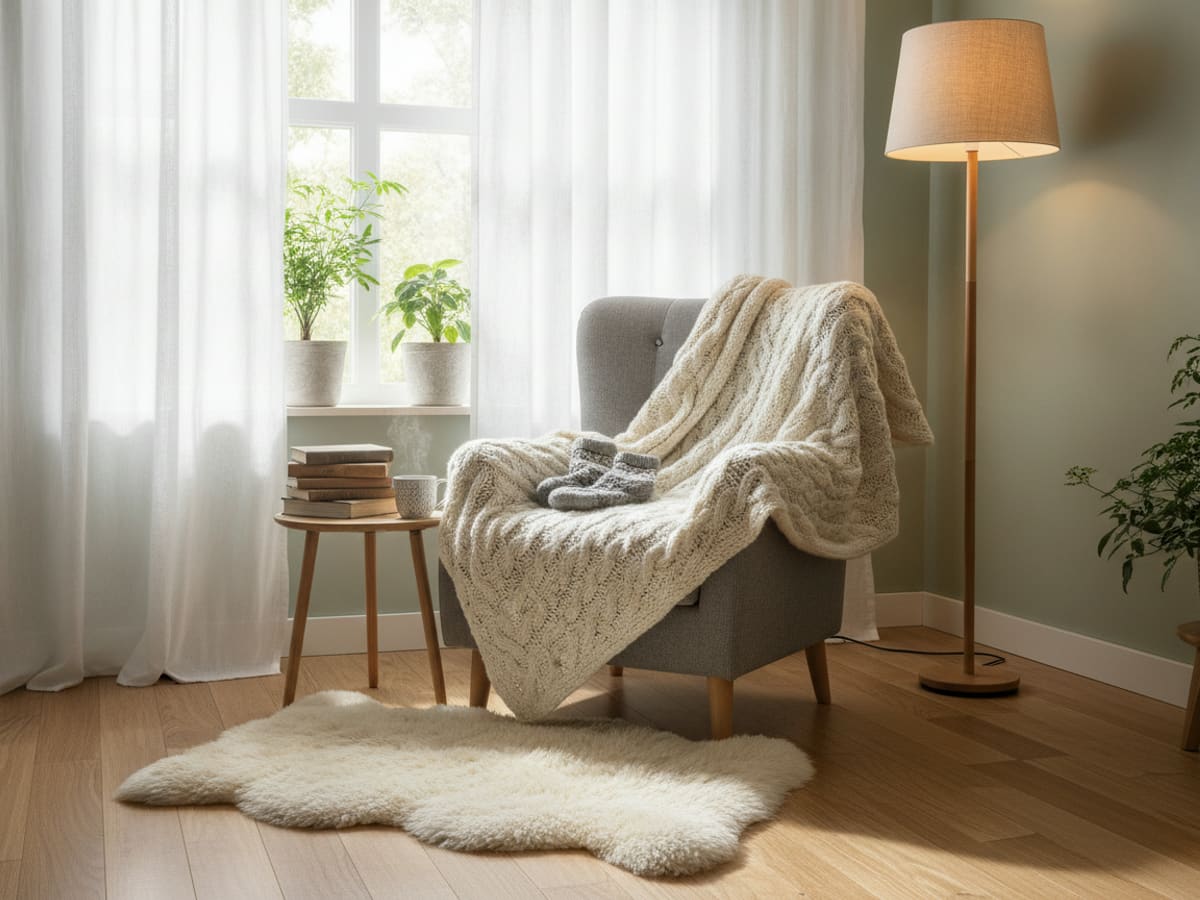
Comfort in cold months is about more than the number on the thermostat. Small changes in layers, textiles, and where you sit can make a home feel noticeably cozier.
Why a warm room and a warm body are different things
The number on the thermostat measures the air. It says nothing about how warm you actually feel. Your body loses heat in a few ways: to cold air moving past your skin, to cold surfaces you touch, and by radiating warmth toward cold walls and windows nearby.
That last one surprises people. You can sit in a room that reads a comfortable temperature and still feel chilly because you're next to a big pane of glass or an uninsulated exterior wall. Your body is quietly sending heat in that direction.
So the goal isn't only to heat the space. It's to slow the heat leaving you, and to cut down on the cold spots around you. Most of the fixes are cheap and easy to undo if they don't work for you.
Layers that earn their keep
Several thin layers usually beat one thick one, because the air trapped between them acts as insulation. You can also peel one off if you warm up.
Think about where you lose comfort first. For many people, it's the feet, hands, neck, and lower back.
- Socks that cover the ankle, with a second pair or slippers over them if the floor is cold.
- A soft scarf or a high collar to cover your neck.
- A light vest or sweater that covers your lower back when you sit.
- A blanket kept on the couch so it's actually within reach.
Natural fibers like wool and cotton, and many fleece-style synthetics, hold warmth well. If you tend to sweat, keep the layer closest to your skin thin and breathable, since damp fabric feels cold fast.
Rugs, curtains, and the floor underfoot
Hard floors, especially tile, hardwood over a crawl space, or concrete, pull heat from your feet quickly. A rug adds a layer between you and the surface. A thicker rug, or a rug over a pad, tends to feel warmer than a thin one.
Put rugs where you actually stand or sit: by the sofa, beside the bed, in front of the kitchen sink. A small rug in the right spot does more than a large one in a spot you rarely use.
Windows are the other big cold surface. Heavier curtains, lined drapes, or cellular shades can make a noticeable difference to how the room feels near the glass. A few tips:
- Close curtains at dusk, when the outdoor temperature starts to drop.
- Open them on sunny days to let the light and warmth in.
- Make sure the curtains hang close to the window and, if possible, reach the sill or the floor.
- Check for drafts around the frame with the back of your hand on a windy day.
If you find a draft, a rolled towel at the bottom of a door or some removable weatherstripping can help while you decide on anything more permanent.
Arranging seating away from cold walls
Look at where you spend your evenings, then look at what's next to you. A sofa pushed against a cold exterior wall, or a chair beside a drafty window, can leave one side of your body feeling cool all night.
Try moving your seating a foot or two away from exterior walls and windows. Interior walls, which have warm rooms on the other side, are usually friendlier. If you can't move the furniture, hang a quilt or a thick fabric panel on the wall behind it, or add a cushion at your back.
You might also try grouping seating closer together. A smaller, cozier arrangement feels warmer than a spread-out one, and it lets you share blankets.
A note on space heater safety
A small space heater can warm you directly without heating the whole house, but it needs respect. Space heaters are a common cause of home fires when used carelessly.
- Plug it straight into a wall outlet, not an extension cord or power strip.
- Keep it at least three feet from curtains, bedding, furniture, and anything that burns.
- Place it on a flat, hard surface, never on a rug or a table.
- Turn it off when you leave the room or go to sleep.
- Choose a model with automatic tip-over shutoff, and make sure your smoke alarms work.
- Keep it away from children and pets.
Small habits for warmer evenings
A few routines add up over the course of an evening.
Cook something in the oven and leave the door ajar afterward, if it's safe and no one is nearby who could get hurt. Have a warm drink in your hands. Close doors to rooms you aren't using so the warmth stays where you are. Move around now and then, since a short walk or some light stretching gets your blood flowing.
Wearing warm clothes before you feel cold works better than waiting until you're shivering. And if you have a favorite spot, make it the coziest one in the house: a rug, a blanket, a cushion, and a lamp with a warm glow. It may not change the thermostat, but it can change how your evening feels.